articles tagged with: crisis
financial crisis, history & society »
featured, financial crisis, world affairs »
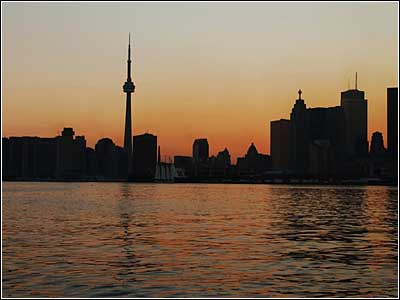
As Canadians sparred over fake lakes, budget-busting security, and the global capitalist conspiracy, the world’s twenty most influential leaders convened in Toronto this past June to negotiate a response to the worst financial crisis in generations. At issue was an age old debate between two economic philosophies: stimulus as a life vest versus stimulus as a straitjacket. The pro-life camp was championed by consumerist America and its global supply chain. The pro-restraint camp was led by conservative Germany and its regional demand chain. At risk were millions of jobs, trillions in debt, and quite possibly the fate of our modern political economy.
financial crisis, history & society »
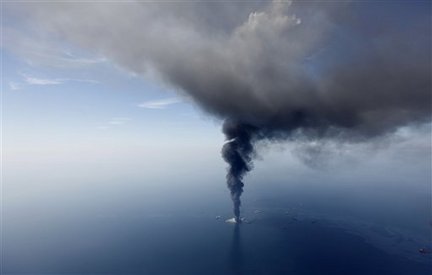
Stopping the spread of financial contagion is deceptively similar to plugging a ruptured deep-sea oil well: the cost is epic, the risk of failure is catastrophic, and expectations of success may be more hopeful than realistic. Recent efforts to address both crises share so many elements that a few tweaks to the following report on the Gulf catastrophe also freakishly describes efforts by the Eurozone to head off the risk of cascading sovereign defaults…
financial crisis, in other words »
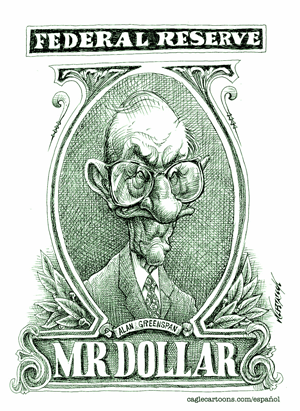
Mr. Dollar testified before the Financial Crisis Inquiry Commission today about the challenges of a self-regulating market and the dangers that lie ahead. While his belief in free market capitalism remains unshaken, Greenspan’s warnings about the key attributes that should underpin a stable banking system — adequate capitalization, liquidity, and regulatory oversight — cast a surprising shot across the bow of modern banking giants who have grown a little too comfortable with their bailout blanket and artificially low interest rates.
financial crisis, history & society, in other words »
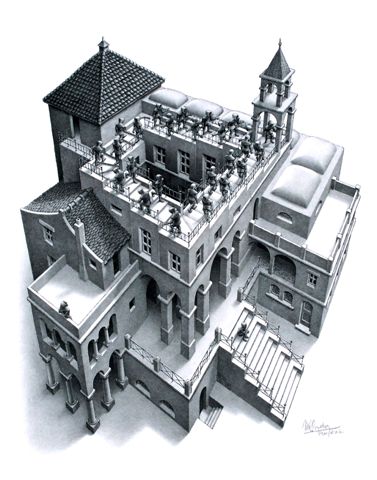
From daily solar cycles to quarterly seasonal changes to the 130,000-year lapse between Ice Ages, our world is filled with natural ebbs and flows. Those that try to forecast the future by studying these longer sweeping patterns are often accused of being out of touch, relying on the distant past for established wisdom rather than embracing contemporary optimism that “this time is different“. In this essay in Foreign Affairs, Niall Ferguson reminds us that America is just as vulnerable to collapse as the many great civilizations that preceded it — maybe even more so given the increasing complexity of our modern global economy…
financial crisis, in other words, world affairs »
“Zapatero is not a good driver. It’s like a boat, which in calm waters steers fine, but when it gets bumpy, they are not prepared.” The same could be said for many of the world’s C-level leaders, so it’s perhaps not surprising that both companies and countries are finding out the hard way that credit can dry up when the sea gets choppy…
financial crisis, in other words »
For all its flaws, one of the great strengths of the American political system is the degree to which competing perspectives fight to the death in Washington’s marketplace of ideas. A perfect example is the recent exchange between Senate Banking Committee member (and Baseball Hall of Famer) Jim Bunning and his monetary nemesis Fed Chairman Bernanke on the eve of a controversial re-nomination…
financial crisis, history & society, in other words »
A comprehensive if somewhat subjective view of the two years since the credit crisis first broke, direct from the horse’s mouth. Perhaps more interesting than any insider account of the Fed’s frantic response to the meltdown of the banking system is the degree to which the Chairman was concerned with the human impact of his macroeconomic policy-making…
finance & economics, financial crisis, in other words »
As capital markets continue to increase in scale and scope, there is a natural tendency to believe that they have also become more accurate at valuation. Scores of “rational” investors acting in their own self-interest, based on their own proprietary information along with anything publicly available, make their best guess about the value of a particular security – from a simple common share of IBM to a bet on the amount of rainfall next April. Those who believe the future looks bright will buy, and those who think better days are behind will sell.
financial crisis, in other words »
As speculative euphoria once again grips financial markets and investors emerge from their fallout shelters in search of higher yield, it is entirely possible that we failed to learn anything from the last 12-18 months of market volatility. After the markets bottomed out on March 9, our valuation anchors were rebased. Could our economic prospects really be that grim? Could all that leverage – all that cash – simply vanish from the financial system overnight? Of course not, went the refrain, and the markets have since pared back almost half of their 2008 losses during one of the largest bear market rallies since the 1930s.
finance & economics, financial crisis, in other words »
Armchair financial quarterbacks would do well to tune out the mass media every so often and tune into the real global dialogue on the nature of the recent crisis and our prospects for a sustainable recovery. It is no coincidence that those whose perspective is truly global consider the fundamental nature of our modern political economy in terms of decades not days, systems not statistics, and welfare not wealth.
In this speech, given just weeks before the March 2008 arranged marriage of Bear Stearns and JPMorgan, this banker to central bankers dissects the credit crisis of 2007 and calls attention to dangerous fault-lines that presaged the apocalyptic deleveraging of the next 18 months…
finance & economics, financial crisis, in other words »
Scientists and market commentators have long been aware of the susceptibility of the markets to any single investment philosophy. The rise of early program trading contributed to the historic one-day loss of nearly 23% on Black Monday in 1987. Recent experiments with risk securitization may cost trillions of borrowed dollars to unwind and decades to fully digest.
finance & economics, history & society, in other words »
Assuming that our lot in life is simply a function of hard work, acquired skills, and a bit of good luck, the only real difference between liberals and conservatives is the degree to which we believe that those who fall on hard times – for whatever reason beyond their control – deserve a helping hand. How we publicly spend on that assistance is not only a question of socio-political philosophy, but also a matter of practical statecraft. Whether “leveling the playing field” or simply “setting the rules of the game”, pharohs, kings, and presidents have all made use of their regulatory oversight with varying degrees of success. This piece in the Boston Review by noted macroeconomist Dean Baker explores the …
financial crisis, history & society, in other words »
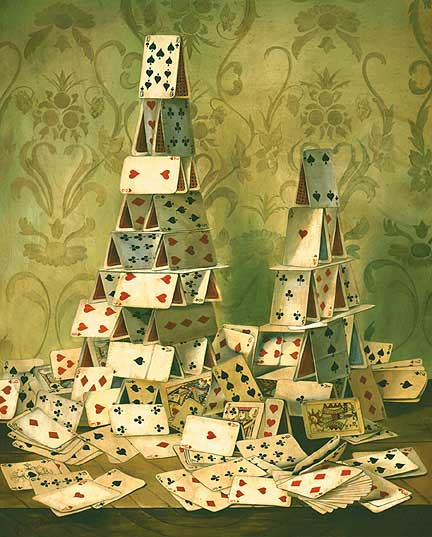
“Despite its severity, we believe that the slump in stock prices will prove an intermediate movement and not the precursor of a business depression…” This advice from the Harvard Economic Society on November 2, 1929 illustrates that unbridled optimism in the capital markets was just as dangerous 80 years ago as it is today. Modern financial crises aren’t simply failures of regulatory oversight or inherent structural weakness. They’re a combination of the cyclicality of human behavior, the dangers of unbridled leverage, increased speculation by unsophisticated investors, and our complete lack of financial memory beyond 20 or 30 years.
finance & economics, history & society, world affairs »
How to Prevent a Blackout
A Beginners’ Guide
On August 14, 2003, my lawnmower died. It was 4:10 pm and the perfect weather for gardening. Suspecting a simple neighbourhood brownout, I resigned myself to reading in the afternoon sun. Power failure wasn’t uncommon during the steamy, air-conditioned months of summer, but as I discovered hours later, this outage was anything but common. At its height, the blackout of 2003 plunged nearly fifty million people into darkness, and it would be days before power returned to the furthest reaches of the grid. Subways and office towers were evacuated, streetlights pulsed hypnotically as pedestrians guided traffic, hospitals and prisons switched to backup diesel generators, and beer and melting ice cream were shared …