history & society
finance & economics, financial crisis, headline, history & society, world affairs »
“The dogmas of the quiet past are inadequate to the stormy present.” - Abraham Lincoln
At a time of great uncertainty there is comfort in ceremony. Election night put a merciful end to the presidential campaign supercycle, and many Americans will be glad to return to prime time TV and ads about how chairs are like Facebook. But ominous headwinds remain, and neither candidate seemed willing or able to create the blueprints for sustainable, responsible, inclusive growth, regardless of who was picked as Chief Executive on November 6th.
featured, financial crisis, history & society »
“The world of finance hails the invention of the wheel over and over again,
often in a slightly more unstable version.”
- John Kenneth Galbraith, A Short History of Financial Euphoria, 1994
Financial markets finally caught a whiff of economic reality these past two weeks, erasing more than $5 trillion of global wealth in seven short trading days. It was the worst market correction since the onset of the financial crisis in late 2008, and it may just be the beginning. A final bombshell dropped late on Friday evening as Standard & Poors held true to its word and robbed the United States of its AAA rating for the first time in history.
financial crisis, history & society »
finance & economics, history & society, science & tech »
As evidence continues to mount that established models of rational decision-making are dangerously out of date, behavioral science has embraced human irrationality in all of its deceptively predictable forms. At the forefront of the field is Duke University professor Dan Ariely, whose simple experiments into human bias have shed light on everything from the fallacy of supply and demand to the problem of procrastination.
financial crisis, history & society »
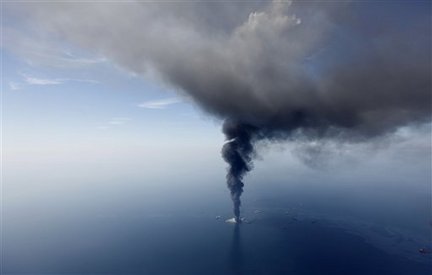
Stopping the spread of financial contagion is deceptively similar to plugging a ruptured deep-sea oil well: the cost is epic, the risk of failure is catastrophic, and expectations of success may be more hopeful than realistic. Recent efforts to address both crises share so many elements that a few tweaks to the following report on the Gulf catastrophe also freakishly describes efforts by the Eurozone to head off the risk of cascading sovereign defaults…
featured, financial crisis, history & society »
Armies of bulls and bears are camped out on either side of the great debate over the future of the global economy. Armed with the latest statistics and plenty of financial incentive, both sides are engaged in massive media campaigns to rally anyone left on the fence — principally retail investors who were either burned in the great collapse of 2008-09 or sat out the fast and furious rally over the past 14 months. As the rhetoric heats up, it becomes increasingly difficult to choose sides. A careful examination of these competing wagers provides a more holistic perspective for anyone brave enough to join the fight.
financial crisis, history & society, in other words »
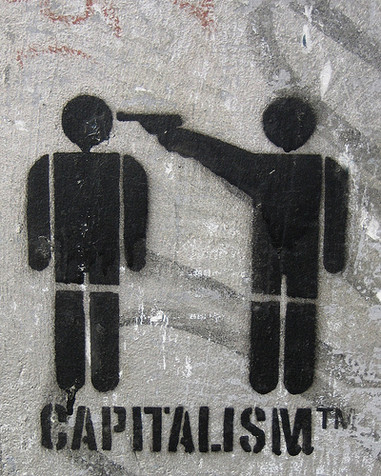
Churchill argued that democracy is the worst form of government, except for all the others. With capitalism now falling under similar fire, modern politicians, businesspeople and academics are once again questioning both the failures of free markets and the failures of government. As pundits gather on either side of the debate — casting blame and contempt across the regulatory divide — one often overlooked explanation for all the recent chaos is the time-honored tendency for human society to self-destruct. Behavioral economists and psychologists are having a field day watching our worst decision-making biases play themselves out in political and capital markets.
financial crisis, history & society, in other words »
From daily solar cycles to quarterly seasonal changes to the 130,000-year lapse between Ice Ages, our world is filled with natural ebbs and flows. Those that try to forecast the future by studying these longer sweeping patterns are often accused of being out of touch, relying on the distant past for established wisdom rather than embracing contemporary optimism that “this time is different“. In this essay in Foreign Affairs, Niall Ferguson reminds us that America is just as vulnerable to collapse as the many great civilizations that preceded it — maybe even more so given the increasing complexity of our modern global economy…
finance & economics, history & society, in other words, world affairs »
It isn’t surprising that so-called “ambulance economics” has gained mass policy appeal as the global economy descends into madness. The battlefield, after all, is no place for quiet research and careful study. But even the most pressing humanitarian disasters could use a little “clinical economics” to help decision-makers better chart out the way forward. Recent poverty relief efforts in Haiti, for instance, should certainly focus first on the bare essentials of sustenance, sanitation, and security. Once politicians and development professionals are able to stop the bleeding, however, the really critical work actually begins in terms of supporting the long-term prosperity of the country. In that spirit, any path forward should take into consideration the unique historical, geographic, cultural, and …
financial crisis, history & society, in other words »
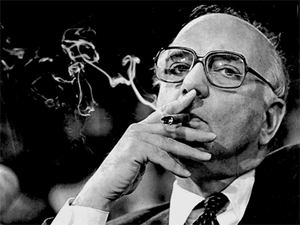
A perennial hot ticket on the lecture circuit at economic clubs and grad schools around the planet, Paul Volcker‘s influence is finally starting to resonate where it counts: at both ends of Pennsylvania Avenue. As his testimony in front of the Senate Banking Committee looms, the broader premise of a more responsible financial services sector pursuing sustainable, profitable growth needs to get out in clear journalistic prose from a messenger untarnished by the last 18 months of political and economic triage. This Sunday NYTimes op-ed attempts to do just that, despite the complexity of the topic. Unfortunately, it falls a little short for those either too stubborn or greedy to listen or too impatient to digest his astute commentary on …
financial crisis, history & society, in other words »
“America’s mainstream religious denominations used to teach the faithful that they would be rewarded in the afterlife. But over the past generation, a different strain of Christian faith has proliferated—one that promises to make believers rich in the here and now. Known as the prosperity gospel, and claiming tens of millions of adherents, it fosters risk-taking and intense material optimism. It pumped air into the housing bubble. And one year into the worst downturn since the Depression, it’s still going strong.”
history & society, in other words, world affairs »
Scores of advanced military technologies – from radio to the Internet to GPS – have successfully made the leap from combat central to electronics expo since the dawn of the industrial military complex. As game consoles grow ever more powerful and programmers continue to push the envelope of simulated reality, consumer electronics are returning the favor. At a fraction of the cost of custom hardware designed by established global defense contractors, networked PS3s and the benefit of retail economies of scale are being used for everything from high-tech imaging systems to simulating the behavior of nuclear weapons, blurring the line yet again between war and peace…
featured, financial crisis, history & society »
Much like the shifting partisan politics which rules Washington in 2- to 4-year cycles, stewardship of the Federal Reserve has ebbed and flowed between neo-Keynsians and Austrians since the birth of American central banking nearly 90 years ago. Two of the Fed’s greatest leaders and keenest minds have crafted American monetary policy for most of the last three decades, and yet they couldn’t be more different.
This is their story.
finance & economics, financial crisis, history & society, in other words »
Humanity is rarely more receptive to change than during the depths of a crisis. At various times, war, famine, and financial paralysis have offered societies around the world an opportunity to revisit their fundamental character. But just as political, economic, and social systems are descending toward chaos, a current of optimism emerges – if only for a moment. The second derivative inflects, like the speed of a car just before a crash. Avoiding Armageddon — or at least pushing it back — releases a shockwave of positive sentiment. Green shoots emerge and reformists are branded as meddling fools who almost ruined a good thing. Stability returns, trust is restored, and the economy springs back to life — with a few important exceptions.
financial crisis, history & society, in other words »
Exploring the recent economic “upheaval” through the lens of history helps in at least two ways: 1) it assures us that humanity has faced similar dangers in the past and somehow lived to tell the tale, and 2) it suggests that the same entrepreneurial instincts that led us into trouble (yet again) also hold the key to restoring stability and growth. This speech by the President of the World Bank highlights a series of events that presaged the crisis — like the “emergence” of emerging economies, the popularity of leveraged finance, and growing imbalances of trade — focusing less on the outcome and more on the decades of unbridled expansion that inspired it…
financial crisis, history & society, in other words »
A comprehensive if somewhat subjective view of the two years since the credit crisis first broke, direct from the horse’s mouth. Perhaps more interesting than any insider account of the Fed’s frantic response to the meltdown of the banking system is the degree to which the Chairman was concerned with the human impact of his macroeconomic policy-making…
financial crisis, history & society, in other words »
Another entertaining piece of journalism by Michael Lewis, this time reporting from the nucleus of the financial crisis. The premise? Buried deep within the world’s largest insurance company lay the other side of the global bet on real estate and perpetual growth. Lewis interviewed the FP traders accused of underwriting the risky default swaps that nearly destroyed the world economy while siphoning-off juicy bonuses from the comfort of their gated Connecticut suburbs. What he turned up was a far bigger fish and an interesting chorus
finance & economics, history & society, in other words »
“Bob Farrell was a legend at Merrill Lynch & Co. for several decades. Farrell had a front-row seat to the go-go markets of the late 1960s, mid-1980s and late 1990s, the brutal bear market of 1973-74, and October 1987′s crash. He retired as chief stock market analyst at the end of 1992, but continued to occasionally publish. Rumor has it for a humongous donation to Farrell’s favorite charity, you can get on his very exclusive email list. Marketwatch gathered some of Farrell’s more famous observations, and republished them as 10 Market Rules to Remember.” – via The Big Picture
featured, financial crisis, history & society »
In the midst of a global financial pandemic, private enterprise finds itself under the public microscope yet again — as it did during the 1930s after a century of unbridled growth and later in the 1970s after decades of stifling regulatory oversight. With this 21st century changing of the guard, the theoretical bases for free market capitalism are now under academic and legislative review. At the heart of the debate is the accuracy of the economic models taught to college students around the planet as though they were immutable physical laws.
financial crisis, history & society, in other words »
While many observers are still consumed by the economic complexities of the financial crisis, historians have been busy making predictions about the ominous geopolitical implications of a destabilized global economy, rising unemployment, falling incomes, and swelling ethnic tensions. Much like its individual citizens, countries in the aggregate tend to retrench in the face of uncertainty about the future, and that could lead to some dangerously myopic decision-making in the months and years ahead…