articles tagged with: geopolitics
financial crisis, history & society, in other words »
Exploring the recent economic “upheaval” through the lens of history helps in at least two ways: 1) it assures us that humanity has faced similar dangers in the past and somehow lived to tell the tale, and 2) it suggests that the same entrepreneurial instincts that led us into trouble (yet again) also hold the key to restoring stability and growth. This speech by the President of the World Bank highlights a series of events that presaged the crisis — like the “emergence” of emerging economies, the popularity of leveraged finance, and growing imbalances of trade — focusing less on the outcome and more on the decades of unbridled expansion that inspired it…
in other words, the middle east, world affairs »
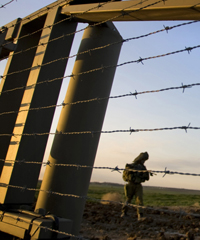
If there’s any doubt remaining among global power-brokers that short-term foreign policy objectives are fundamentally flawed, recent events in the Levant have provided ample evidence. Such tribal conflict has played out in the Garden of Eden since northern Neanderthals and southern proto-human colonies first crossed paths during the last major Ice Age. Since that time, control over the region has changed hands a number of times, from Semetic tribes to Egyptian pharaohs to Roman Catholics to Muslim traders to Christian crusaders to Muslim Turks, and so forth. For every fence that was built and every line that was drawn, rivals always built a bigger ladder or dug a deeper tunnel. And so the feud was passed from generation to generation,…
finance & economics, history & society »
This counter-factual analysis of China’s path toward capitalism reveals that the country’s biggest cities aren’t necessarily the engines of dynamic Asian progress that modern commentators have suggested, and that the country’s future may lie in rural areas where entrepreneurship and competition have thrived since Deng Xiaoping’s Four Modernizations…
financial crisis, history & society, in other words, world affairs »
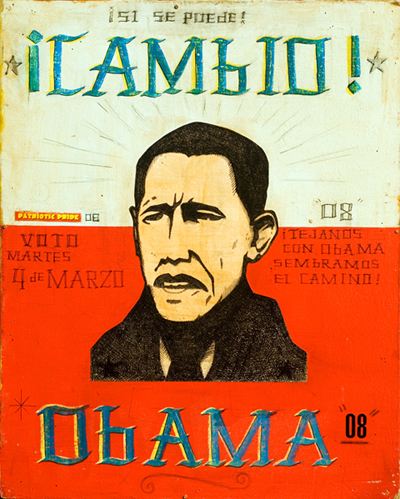
While the world comes to terms with yesterday’s historic call for change, Nouriel Roubini and his team have pulled together a laundry list of the many great challenges that lie ahead…
finance & economics, in other words, world affairs »
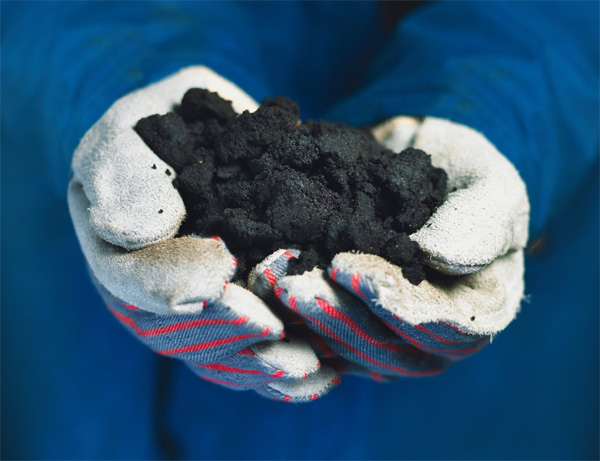
As Canadians flock to the polls later this month, quietly supplying 22% of America’s oil and 13% of its natural gas, its neighbours to the south have barely noticed. Cross-border oil flows are inevitable – given that America controls of a mere 2% of the world’s reserves and consumes almost 25% of supply – and securing its long-term petroleum assumes the full participation of Alberta’s carbon-rich tar sands and the off-shore bounty at Hibernia. Even Governor Palin’s Wildlife Reserve is virtually useless without passage by pipe across Canada’s Western provinces. Given the importance of “Securing America’s Energy Future” during a twin election year, it’s surprising that talk hasn’t returned to NAFTA,
financial crisis, history & society, in other words »
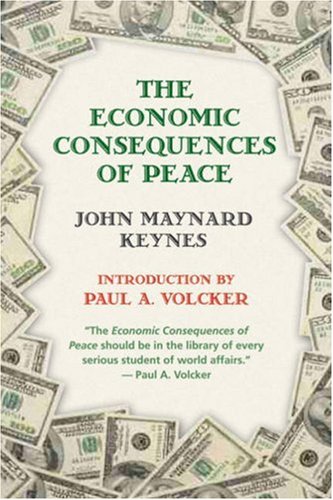
Keynesian reflections from 1919 on the first era of true globalization, complete with bountiful trade, unparalleled upward mobility, liquid labor markets, secure international travel, and a blissful ignorance of the fragility of this new 20th Century World Order…
What an extraordinary episode in the economic progress of man that age was which came to an end in August 1914! The greater part of the population, it is true, worked hard and lived at a low standard of comfort, yet were, to all appearances, reasonably contented with this lot. But escape was possible, for any man of capacity or character at all exceeding the average, into the middle and upper classes, for whom life offered, at a low cost and with…
finance & economics, world affairs »
Assuming that the United States decides to impose a $25 per barrel tariff on all imported oil (crude and product) – and Canada and Mexico were not exempt — let’s explore how this might affect:
a. The volume of oil imported into the United States?
Volume responses to a $25 tariff would vary over time. In the near-term, there would only be a negligible decrease in the volume of oil imported (given a low short-run elasticity of energy demand) as industries, supply chains, and consumers remain highly dependent on existing petroleum infrastructure. The redistribution of the tariff (with tax reductions) would partially offset the incremental cost to businesses and consumers, but the policy is unlikely…
finance & economics, world affairs »
An excerpt from the mid-term “problem set” in ENR-302…
3. The country of Xanadu is dependent of the use of domestically produced methanol for 100% of its energy needs. The price of methanol is set by a competitive market and the fuel is priced at $2.50 per gallon. Two large companies supply 80% of the market and each has costs of $1.50 per gallon. The opposition party and most of the national labor unions argue that these two companies are making obscene profits. They demand that the President place a mandatory price cap of $2.00 on the price of methanol to prevent “this abuse of market power.”
Assume that the elasticity of demand is 0.4 and…
finance & economics, financial crisis, history & society, world affairs »
An expanded look at the role corporations and hospitable business environments have played in stabilizing the anarchic system of international relations. This work is based on an earlier paper which focused on the rise of the corporation as a key variable in the calculus of global peace and security…
finance & economics, history & society, world affairs »
This paper was written for quite possibly the best combination of professor and class I’ve ever experienced. If only all academic endeavor challenged so profoundly, surveyed so broadly, and bore as much intellectual fruit…
Hegemonic Stability and the Rise of Global Corporations
by Devin DeCiantis
“The logic of markets is borderless,
but the logic of politics remains bounded.”
- Louis W. Pauley, Who Elected the Bankers? Surveillance and Control in the World Economy, 1997
history & society, in other words »
“Know thyself, know thy enemy. A thousand battles, a thousand victories.” In the case of Iran and the U.S., Sun Tzu’s prescient advice — combined with the thorough research of “your correspondent” — suggest that peace might be an easier wager than recent history predicts. With their popularity on the wane, like-minded conservatives in their ranks, and religious ideology on their side, Bush and Ahmadinejad have more in common today than either care to admit…
finance & economics, in other words, world affairs »
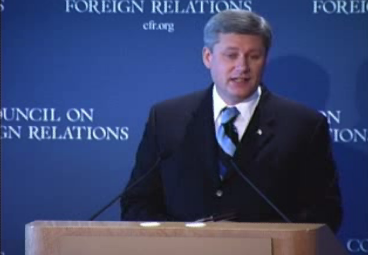
With great power may come great responsibility, but middle power certainly has its role to play policing the economic and political bulge. In this address at the CFR, Canada’s Prime Minister waxes idealistically about the challenges of a national resource bounty that rivals any in the world, a mixed ethnic heritage that is the model for progressive integration, and a desire to project Canadian sovereignty and foreign policy into the 21st century…
in other words, world affairs »
The Economist has a knack for understanding leading indicators, be they economic, financial or political. This time, Russia falls under the looking glass, and the rise of the siloviki present yet another cause for Western concern. With allied hands tied in the Middle East chasing volatile natural resources and battling a crisis of confidence here at home, Putin & Co. apparently don’t need an invitation to continue consolidating their grip on one of the world’s largest and most important geopolitical economies…
in other words, world affairs »
“Now that an immediate peril is not plainly visible, there is a natural tendency to relax and to return to business as usual…. But I feel that we are seriously failing in our attitude toward the international problems whose solution will largely determine our future.”
George C. Marshall
Washington’s Birthday Remarks at Princeton University
February 22, 1947
history & society, in other words, world affairs »
Sober words from one of this primary’s lesser known Democratic candidates, on the benefits of bipartisan, international negotiation with Iran and the power of assertive compromise. As Atticus Finch might suggest, reconciling “The Axis” and “The Great Satan” may take little more than stepping inside the other guy’s skin and “walk[ing] around for a little”, and as Governor Richardson himself asserts, the taboo of Persian engagement must be overcome before any meaningful progress will ever take place…
history & society, in other words, world affairs »
finance & economics, in other words »
Recent reports have pegged open interest in the world’s largest IPO at nearly US$400 billion. That’s a lot of capital ready to speculate on a still unproven Chinese macroeconomy, particularly in the face of its ongoing structural woes. Could this be the end of the beginning for capitalism in China? Or perhaps the beginning of the end…
The Enduring Allure of China
by Peter Zeihan, Stratfor.com
The Industrial and Commercial Bank of China (ICBC) is expected to raise nearly $22 billion in an initial public offering (IPO) — the largest in history — after shares are made available to retail investors Oct. 27.…
the middle east, travel & life, world affairs »
Thoughts from the frontlines of the war in Lebanon. What I know I’ve included, and what I don’t I’ll leave up to you. Internet has been tough to find but I’ll try to keep things updated as often as I can. For more background on the conflict, check out our ongoing coverage of the Middle East…
Wednesday, July 12, 2006 | 12:01PM
Twelve plus hours after we landed in Beirut, the only civilian airport in the country was bombed by the Israeli Air Force. Apparently Hezbollah commandos crossed the Green Line last night and kidnapped two young Israeli soldiers, just weeks after a soldier was held for ransom by Hamas guerillas…
in other words, world affairs »
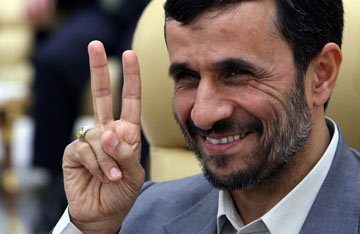
Described as the first direct communication from an Iranian leader to an American president since 1979, Ahmadinajad’s recent letter to President Bush touched on a broad array of socio-political matters that strike at the very heart of the current standoff between Tehran and Washington. Below is an exerpt of that letter — originally translated from Farsi…
Mr George Bush, President of the United States of America
For sometime now I have been thinking, how one can justify the undeniable contradictions that exist in the international arena — which are being constantly debated, specially in political forums and amongst university students. Many questions remain unanswered. These have prompted me to discuss some of the contradictions and questions, in the hopes that…